Pre-seed  ·  Investor Overview

A serious wedge into
a $70B industry.

Trash collection hasn't changed structurally since the 1960s. The truck still goes door to door, stop by stop. We're building the system that ends that model — starting where it breaks down first.

$70B
US municipal waste collection market, annually
300–600
Individual stops per residential truck route, every day
$6–8
Estimated labor and fuel cost per stop (SWANA, 2023)
The problem

The cost isn't hauling trash.
It's stopping for it.

Every residential route sends one truck to 300–600 individual doors. The driver dismounts, lifts, empties, and repeats — for hours. Nothing about this sequence has been automated. It's pure labor, compounding in cost every year.

40%

Annual sanitation driver turnover

Routes get combined, pickups get missed, operators face contract penalties. The labor problem isn't improving — it's accelerating. Wages are up 34% since 2020 with no structural relief.

SWANA Workforce Survey, 2023 · BLS Wage Data, 2024
$6–8

Cost per stop, not per ton

The billing unit is the ton. The cost unit is the stop. Operators absorb the gap on every route, every day. Across millions of routes annually, that's tens of billions in structural inefficiency with no fix in the current model.

SWANA benchmarking report, 2023
The thesis

The architecture is wrong.
Replacing the driver doesn't fix it.

The real problem is that the truck goes to the waste. The waste should come to a container. Robotrash changes the collection architecture, not just the labor input.

What's broken

Trash systems don't talk to each other. Fill levels aren't tracked. Routes run on fixed schedules regardless of demand. A residential route is 300–600 stops of the same mechanical sequence, every single day.

The truck goes to the waste. The waste should come to a container.

Replacing the driver doesn't fix this. The collection architecture is fundamentally wrong.

The wedge

We're not trying to replace every trash truck. We're starting where the model breaks down hardest: dense controlled environments where routes are predictable, traffic is limited, and one operator manages hundreds of units.

One rover. One zone station. One contract. Deployable now.

Apartment complexes, gated communities, and private campuses are the first market — before we've touched a single public street.

What we're building

The first version does not require perfect city-wide autonomy. Fixed routes, remote assist, bagged trash only, controlled environments. The navigation stack is well-understood.

Start constrained. Prove the model. Expand the environment.

The active engineering challenge is the waste acceptance mechanism: the specific problem no delivery robot addresses today.

Why now

Three structural shifts
converged in 2023–2024.

This window didn't exist three years ago. The company that builds the first deployable version now controls the physical infrastructure, and that infrastructure isn't software-switchable.

−90%

Hardware costs collapsed

LiDAR dropped from $75,000 to under $500. Electric drivetrains are now cost-competitive at sub-1-ton scale. The hardware to build a deployable rover finally costs less than a used car. That wasn't true in 2021.

+34%

Labor costs keep climbing

Sanitation wages are up 34% since 2020 (BLS). Driver retention is at historic lows. Every year the status quo holds, the economic case for automation strengthens — and the urgency for operators grows.

2035

Regulation is forcing the shift

The EPA's Clean Trucks Plan (Phase 3) sets strict zero-emission targets for vocational fleets through 2032. State mandates require 75% of new garbage trucks to be zero-emission by 2035. Fleet operators are already budgeting for this transition.

What we believe

Three non-obvious bets.

The founder

One founder.
Very specific
obsession.

Infrastructure that scales to millions without breaking is a software problem. Waste collection hasn't been treated as one yet.
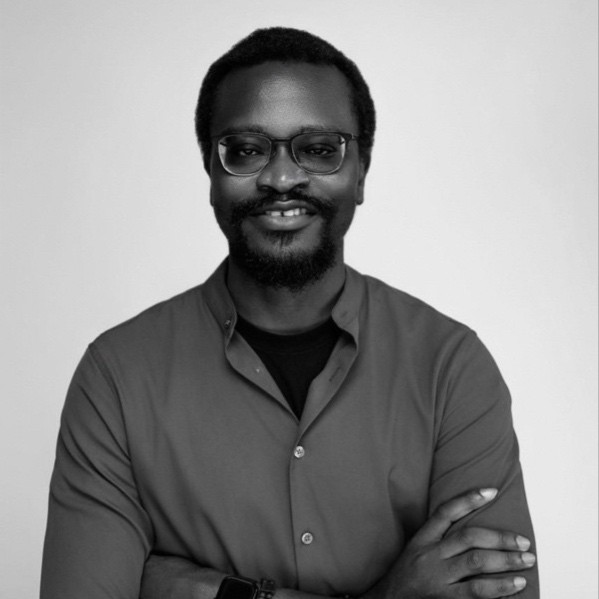
Babatunde Fashola
Babatunde Fashola
Founder & CEO

Spent over a decade building large-scale infrastructure at Twitter/X, Affirm, and IBM Watson — systems designed to handle millions of events with minimal human intervention. That's the same problem class as waste collection, different physical layer.

The gap between how trash collection works today and how it should work is too specific and too large to leave alone. The first version doesn't need to be perfect. It needs to be deployable.

IBM Watson Twitter / X Affirm
Get in touch

Pre-seed.
Raising now.

We're mapping our first deployment partners and talking to investors who understand physical infrastructure built software-first. If that's you, let's talk.